
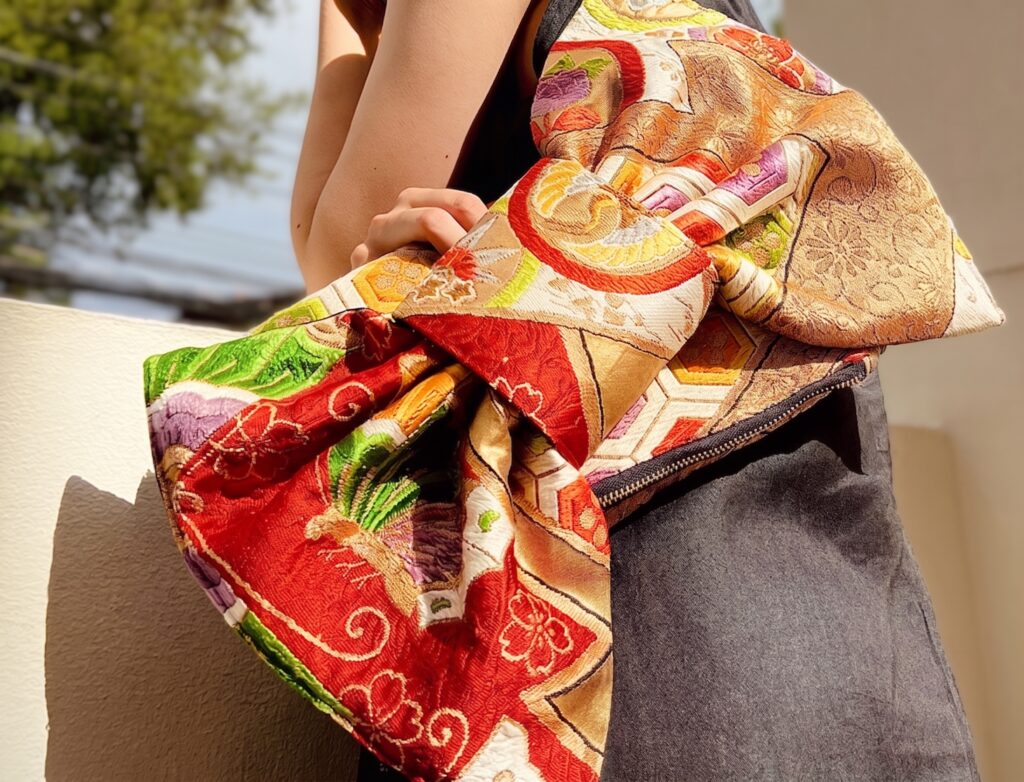
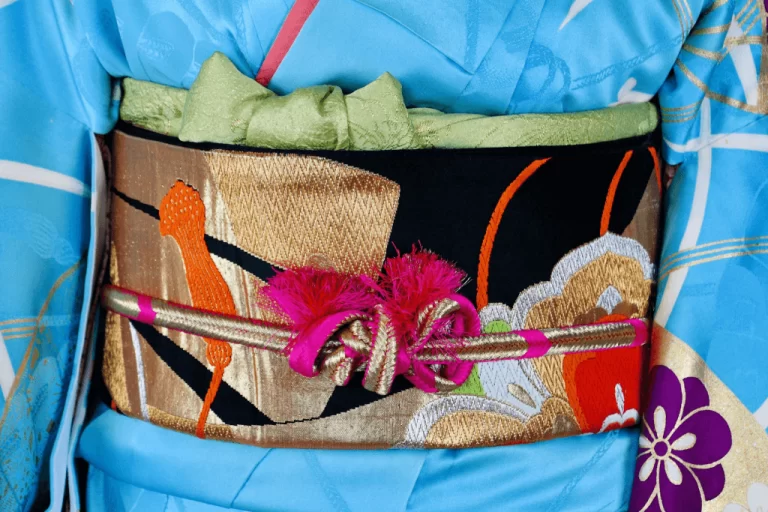
An obi is the wide sash worn with a kimono. The good ones are woven rather than printed, often with silk and metallic thread, and a single obi can take weeks on a loom. They are also, increasingly, imitated with a photograph of that weave printed onto polyester.
Both look fine in a product photo. In your hands they are not remotely the same thing. Here is what we check, and what you can check without knowing anything about textiles.
1. Turn it over
A woven pattern exists on both sides of the cloth. The reverse will be a shadow of the front, with the same shapes in reversed colours where the threads cross behind. A print sits on the surface, so the back is blank or a flat colour.
This one test catches most imitations, and it takes two seconds.
2. Look at the edge of the pattern
Under any light, a woven line has a tiny step to it, because the thread has to cross a warp to get there. A printed line is perfectly smooth. Once you have seen the difference you cannot unsee it.
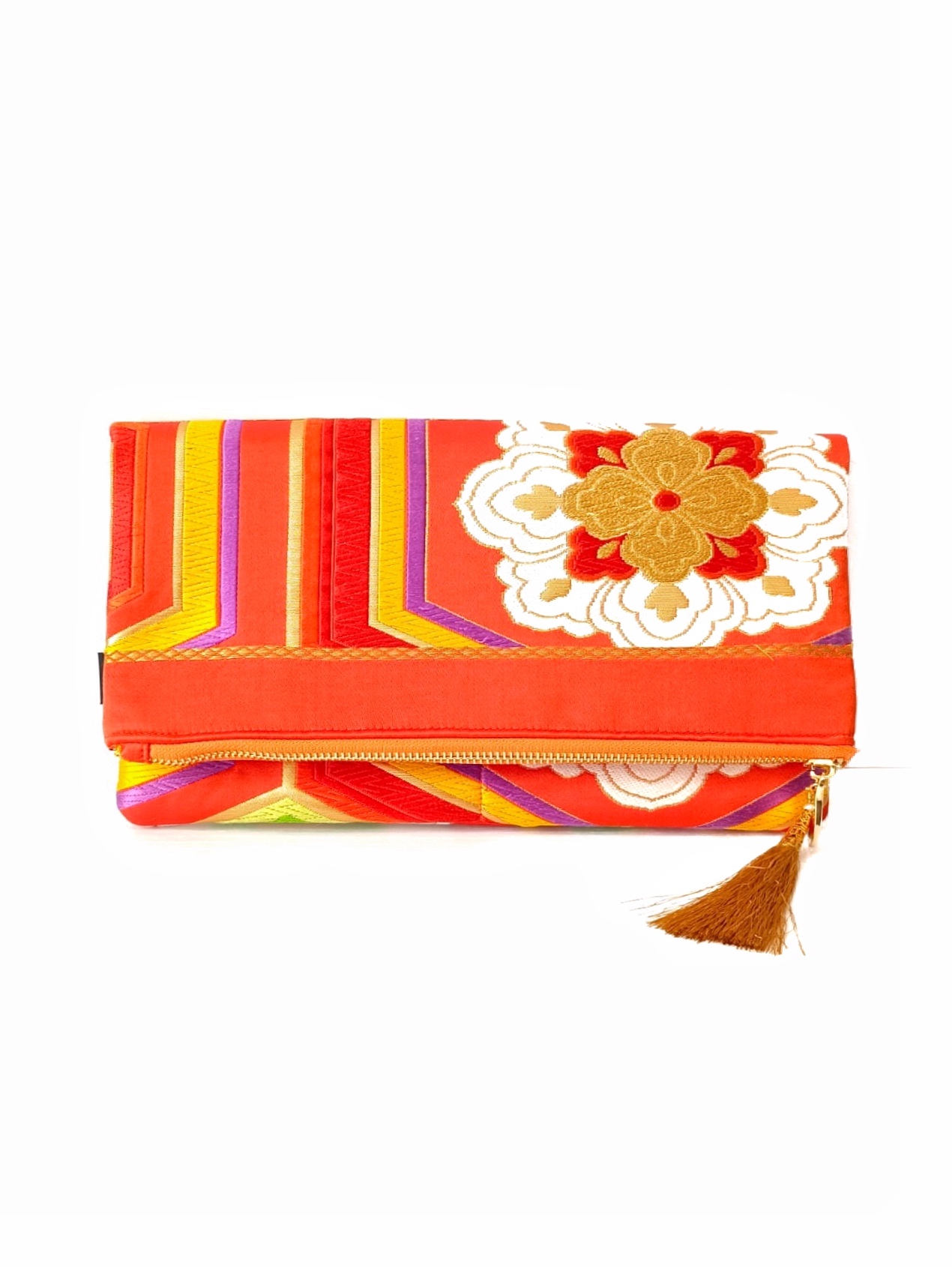
3. Feel the weight
Real obi cloth has body. It holds a fold, it does not cling, and it has a slight coolness because silk moves heat away from your hand. Polyester warms up almost instantly and drapes limply.
4. Find the metallic thread
Gold and silver in an obi is usually a flat foil-wrapped thread lying along the surface, catching light from one direction and going dull from another. Printed gold is the same brightness from every angle, because it is ink.
Tilt the piece. If the shine moves, it is thread.
5. Accept the flaws
A vintage obi has been worn. There may be a faint fold line, a slightly softer patch, a colour that has aged unevenly. We cut around anything that would not last, but a piece with no history at all in it is usually a piece with no history.
6. Ask how many exist
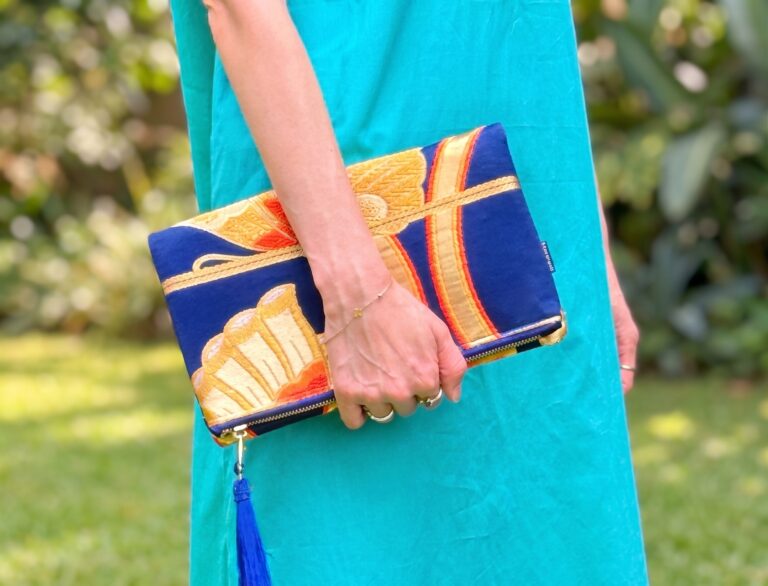
This is the honest one. A length of obi silk yields a handful of bags and then that fabric is finished. If a shop can sell you the same pattern in ten colours and restock it next month, it is not vintage cloth. There is nothing wrong with a printed bag, but it should not cost what woven silk costs.
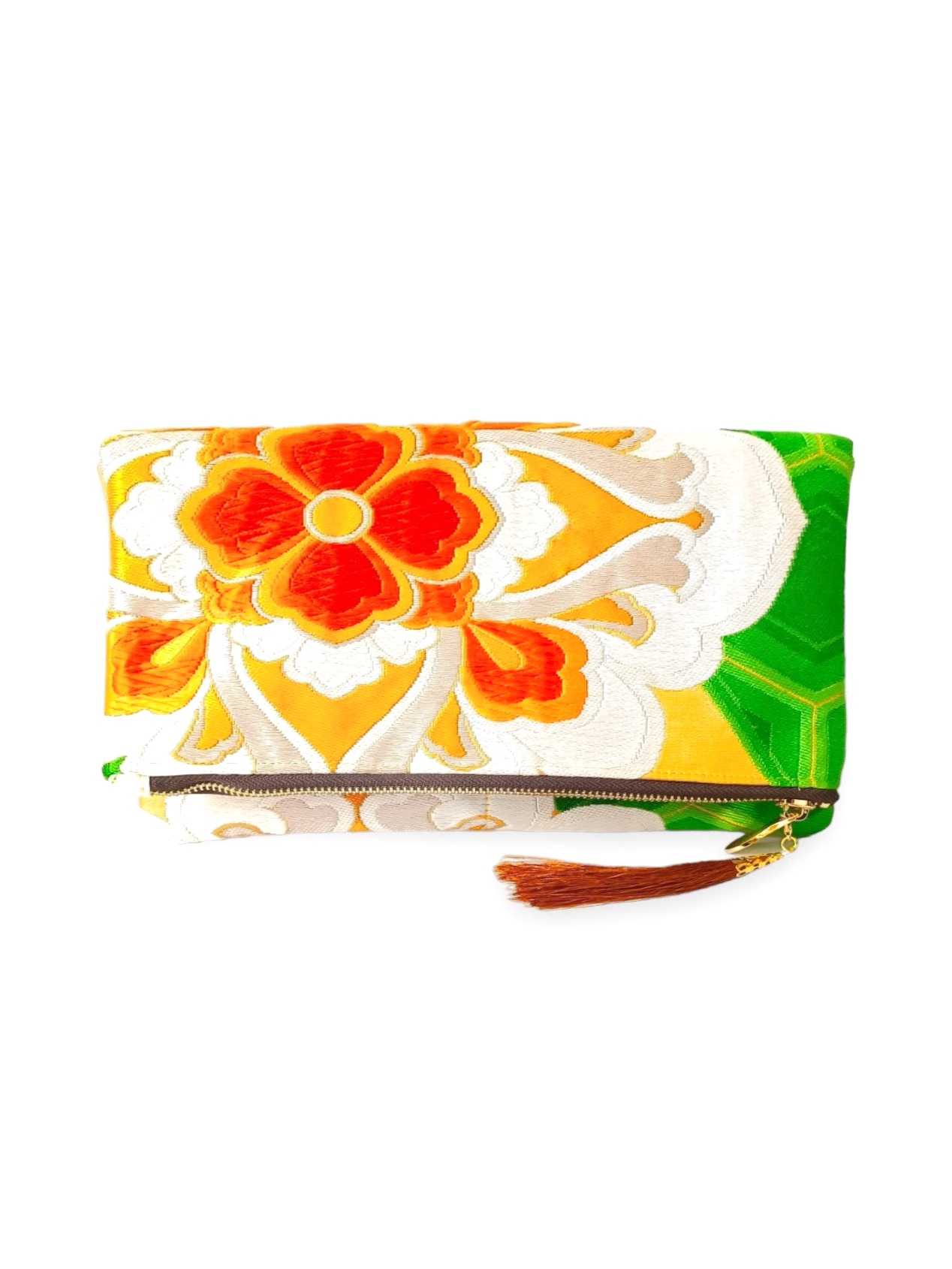
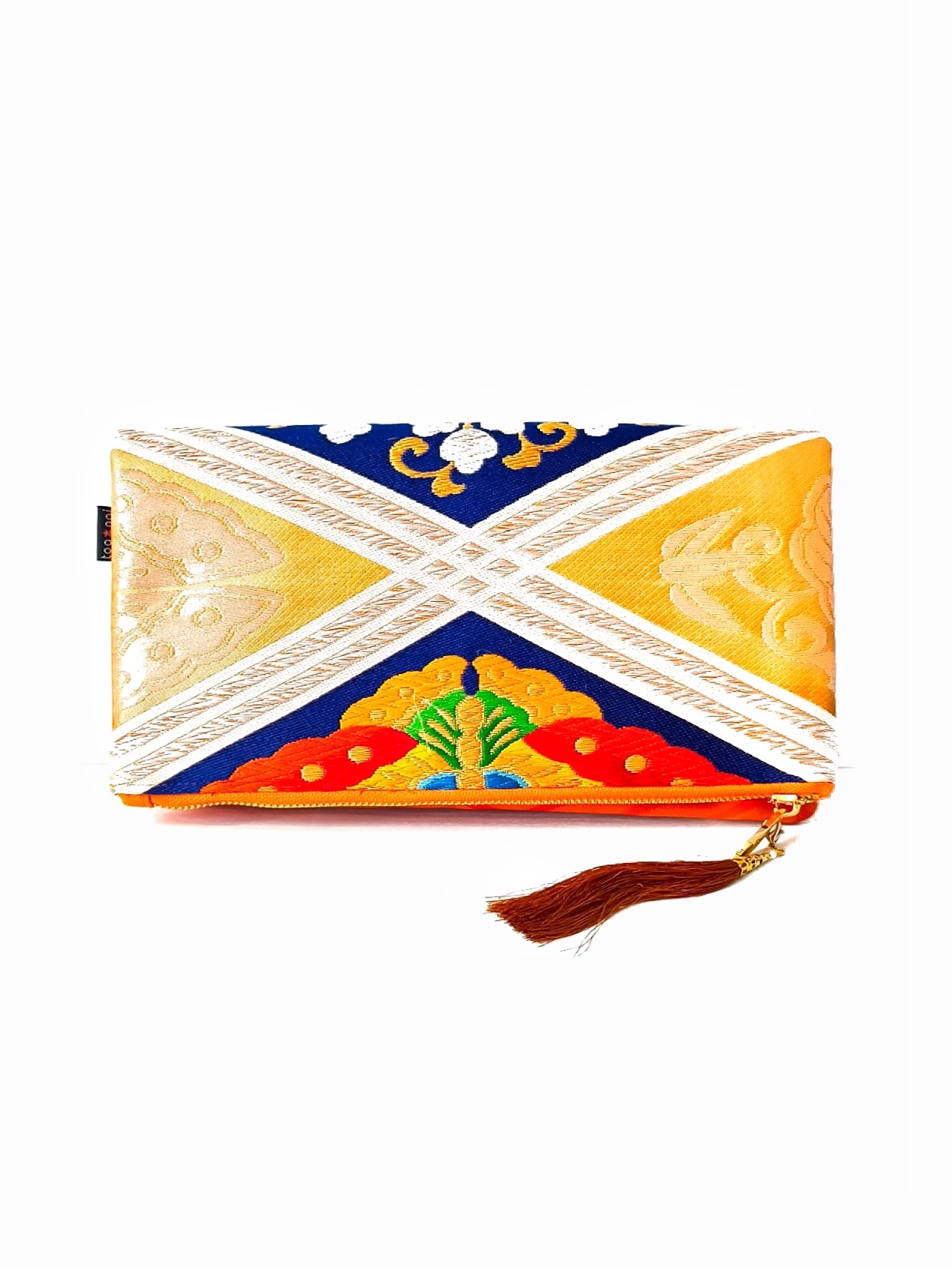
Why we cut them up at all
People sometimes ask whether it is a shame to cut an obi. The honest answer is that most of the ones we buy were never going to be worn again. Formal kimono is worn rarely now, the sashes sit in cupboards, and a beautiful piece of weaving spends fifty years in the dark. Cut into a bag, it gets carried around Bangkok.
We do not cut anything that is still a complete, wearable, valuable obi. Those are worth more whole, and we say so.
See one in person
The kimono bags are on the second floor of the house at 259/80 Soi Pridi Banomyong 13, off Sukhumvit 71, Monday to Saturday, 9:30 to 17:00. Turn any of them over. That is the whole test.

 JA
JA  EN
EN  TH
TH